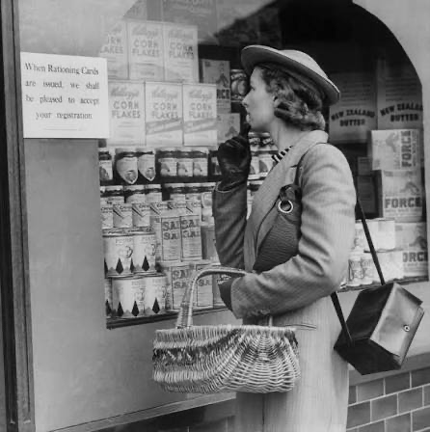
In 1939 Britain was unprepared for war, not just militarily but also agriculturally, and these deficiencies continued to make postwar life difficult. In addition, the Labor government chose to continue food rationing in order to send more supplies to devastated Europe. Rapid consumer recovery was not a priority.
As a result, the strict rationing that had taken place during the war years remained. Every man, woman, and child still had a ration book, although that did not guarantee the availability of meat, milk and dairy products, eggs, and sugar. In addition, payment had to be made for what was provided.

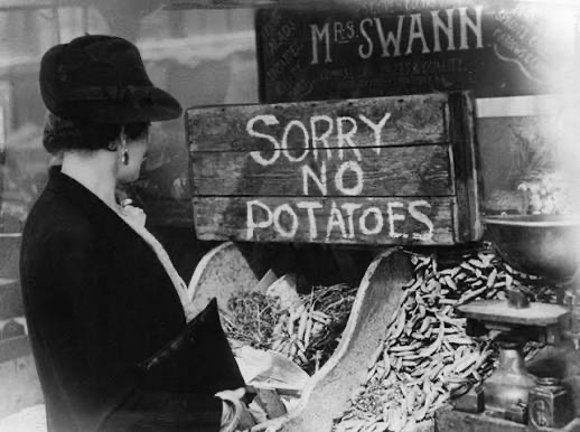
Fruits and vegetables, including tomatoes and onions, were not rationed after the war but were scarce. Insufficient housing existed. There were also shortages of many essential items like clothing, soap, and petrol. Very few individuals owned a car. All were strongly encouraged not to waste water.
On the geopolitical front, alliances had changed. The Soviet Union had closed its borders and was now an enemy. France was unstable due to the communist elements in her government. The United States was a competitor.
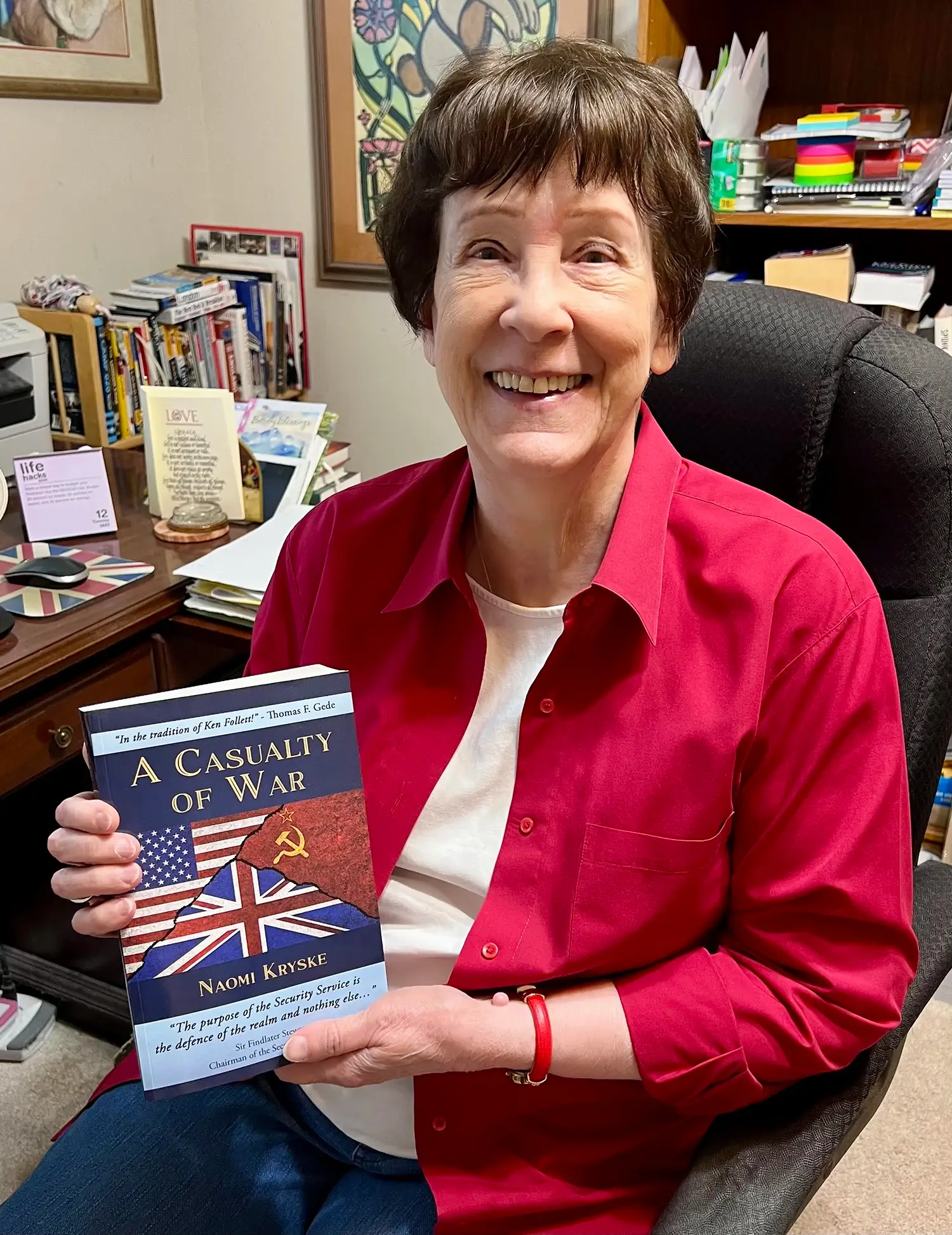
Into this social morass is thrown a sheltered young American woman whose memory is deemed critical for Britain’s national security. Officers with MI5, Britain’s Internal Security Service, are tasked with unlocking it.
One character in A Casualty of War states that “we are the sum of all we have done: learnt, loved, lost, grieved, and healed.” This wisdom applies not just to the characters in this novel but to all of us.